Italy, Nardò
Nardo
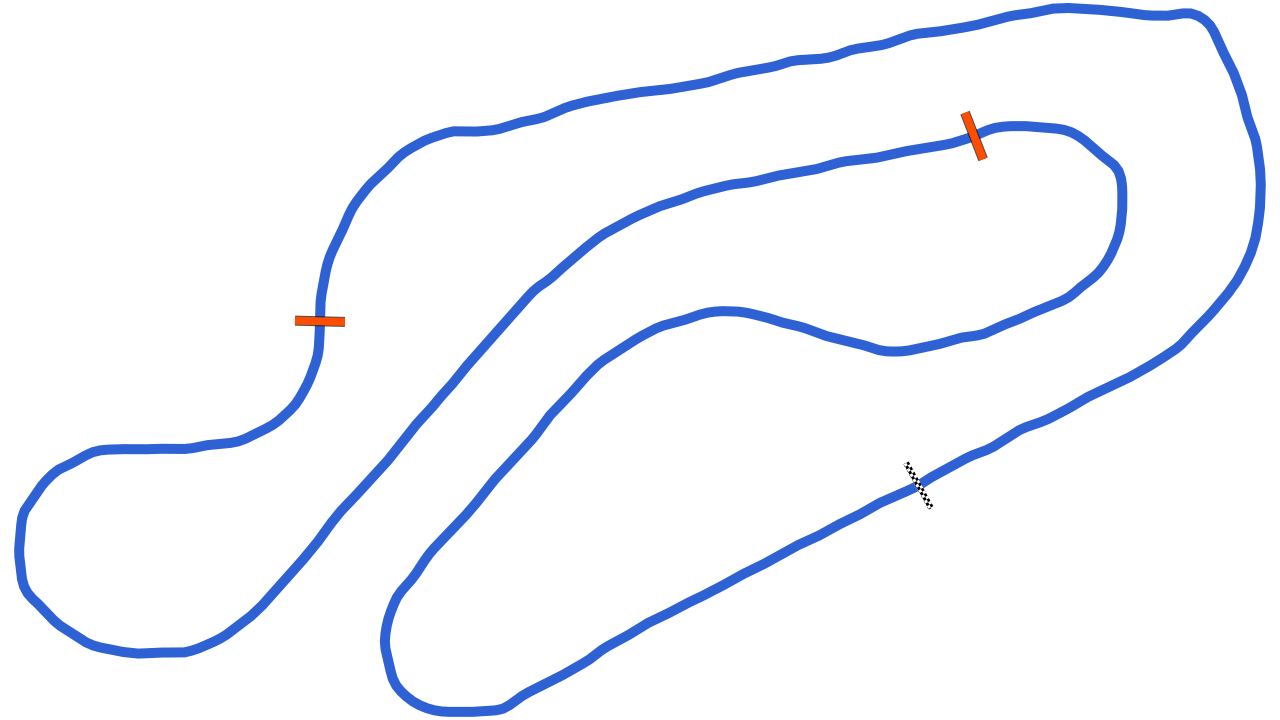
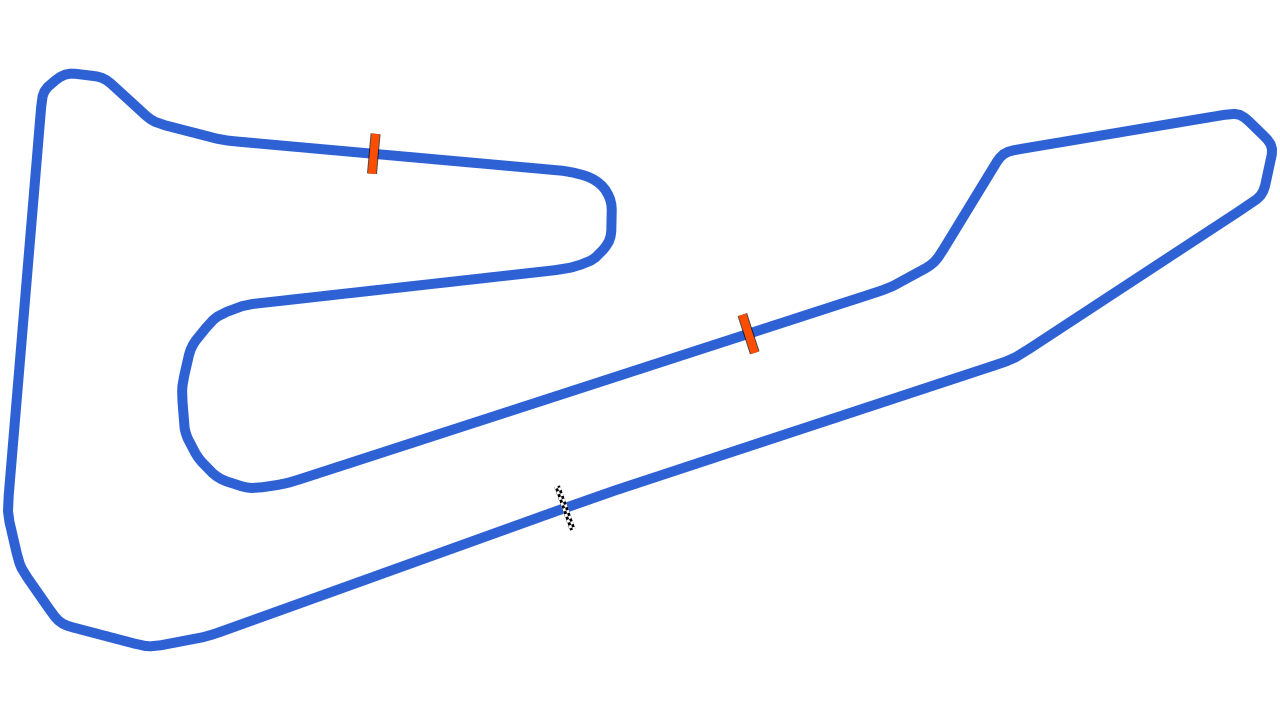
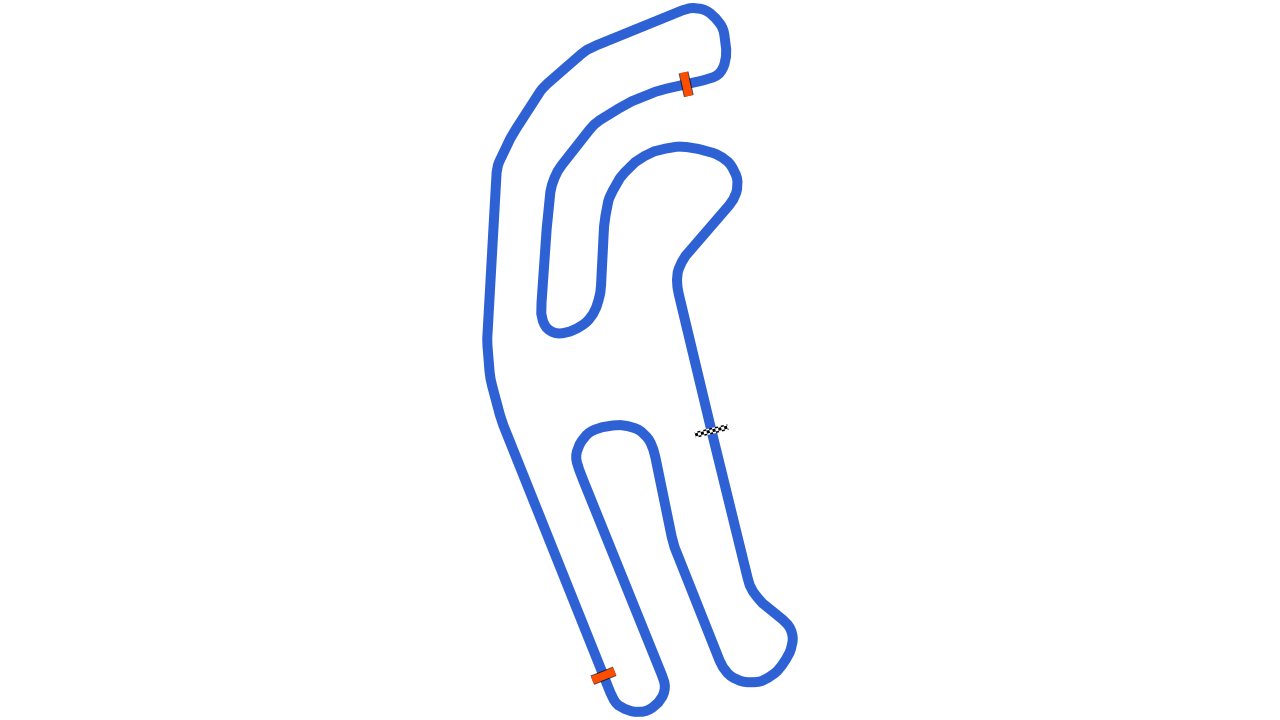
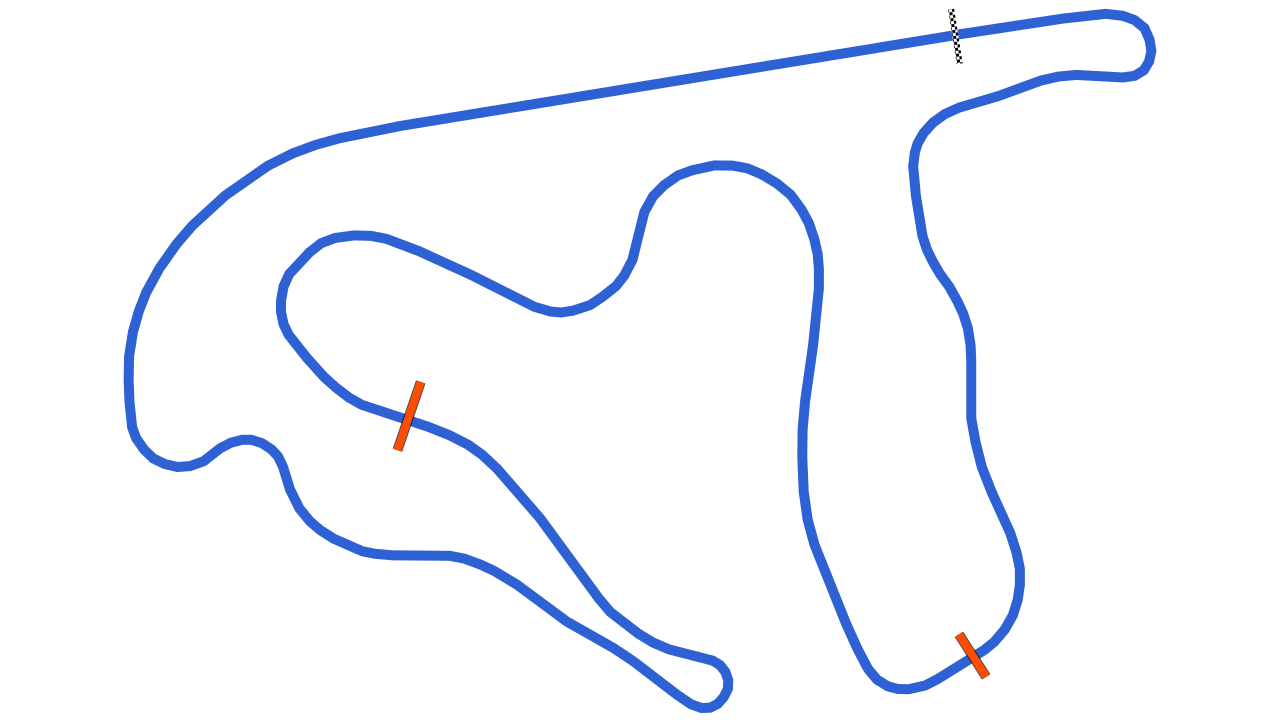
A 6.222 km circuit in Nardò. Timed layouts, lap times and what you need to know before a track day here.
Going to Nardo?
See which corner costs you the most time.
Record the session on your phone. Vetkuro splits the laps, times every sector and shows where the gap to your best lap opens.
Filming your laps?
Put speed, delta and lap time on your onboard video.
Overlay the data from the same session on the footage, synced automatically. One file to watch back, or to share.
Driving with friends?
Find out who is faster, and in which corner.
Overlay two laps from the same day and see exactly where the gap opens, not only the final number.
Recorded on Vetkuro · No sessions yet
Nardo lap times
Timed from GPS on real track days, not typed in. Compare within one layout and one vehicle class, because a motorcycle lap and a car lap are not the same thing.
No recorded laps on Nardo Handling Track yet.
Record a session on this layout and your lap becomes the time other drivers in your class compare against.
Track day guide
Track day at Nardo
Weather by month, who runs the days and what to put in the car. Written for a first visit.
Who runs track days here
What to bring
- Helmet that meets the organiser's standard
- Long sleeves, long trousers, closed shoes
- Tyre pressure gauge, since pressures rise fast on track
- Removable towing eye fitted or in the car
- An empty boot: loose items out before the first session
- Your phone in a rigid mount, recording with Vetkuro
Weather by month
Now, in November: 19°C by day, 14°C at night, rain on 14 days. Warmest in July, 31°C by day on average. Coldest in January, 9°C at night. Fewest days with rain: July.
Rain: days with rain per month. Climate: NASA POWER, daily data 2016–2025. Monthly averages, not a forecast. Check the organiser's calendar for open dates. The data was obtained from the National Aeronautics and Space Administration (NASA) Langley Research Center's Prediction Of Worldwide Energy Resources (POWER) project funded through the NASA Earth Science Division.
Elevation profile
Nardo elevation
Elevation change 20 m, steepest gradient 5.3%. The highest point, about 52 m above sea level, is 5.91 km from the start line; the lowest, about 32 m, 2.24 km.
Height above sea level, approximate. HoverTouch the profile for any point.
From a terrain model, sampled every 10 m along the track line and smoothed over 100 m. Heights above sea level are approximate: trees and buildings along the line read up to about 15 m high. Produced using Copernicus WorldDEM-30 © DLR e.V. 2010-2014 and © Airbus Defence and Space GmbH 2014-2018 provided under COPERNICUS by the European Union and ESA; all rights reserved. The organisations in charge of the Copernicus programme by law or by delegation do not incur any liability for any use of the Copernicus WorldDEM-30.
Going to Nardo?
More to do with the session than the lap time
About Nardo
Overview
The Nardò Technical Center is a vehicle proving ground in the comune of Nardò, in the province of Lecce in Apulia. It lies on the provincial road SP 359 between Nardò and Avetrana, more than 20 km north-west of the town. Founded by Fiat in 1975, it has been owned by Porsche since 2012 and is run by Porsche Engineering. It is a closed industrial test site rather than a racing circuit, offering testing to more than 90 vehicle manufacturers, and Porsche notes that the mild climate allows work all year round. The site covers more than 700 hectares and holds over 20 test tracks and facilities. Its circular high-speed ring, four kilometres across, is described by Porsche as unique in the world.
Technical Specifications and Track Features
The handling track, added inside the ring in 2008, is 6.222 km long and combines one long straight with 16 corners of differing radius, width and banking, several of them modelled on bends of the Nürburgring Nordschleife. It is used for durability, reliability, tyre wear, driveline and vehicle dynamics testing, thermal mapping, driver assistance systems and night driving, on cars and motorcycles. The ring has four lanes for cars and motorcycles, 16 m wide in all and banked from 4% to 22.5%, so that in the outer lane a car at the neutral speed of about 240 km/h needs no steering input. A separate inner lane 9 m wide serves trucks. Speeds are capped during normal weekly running, and higher speeds are allowed only when a client has the ring to itself. The car dynamics platform covers 106,000 square metres.
Facilities and Specialized Areas
Besides the ring and the handling track, the centre has dynamics areas for cars and trucks, ride comfort and noise tracks added in 2002 and 2008, workshops and offices, and rapid chargers for electric vehicles. Its work has widened to fast-charging behaviour, driver assistance, connected services and automated driving. Porsche invested about 80 million euros in tracks, workshops and safety systems in its first ten years, including a seven-month renovation in 2019, costing 35 million euros, that resurfaced the ring, rebuilt the car dynamics platform and installed a new guardrail system developed for high-speed testing. Permanent staff grew from 105 in 2012 to more than 160 in 2022.
History
The centre was founded on 1 July 1975 as the Società Autopiste Sperimentali Nardò, later Fiat Centro Test, with the ring for cars and trucks and a car dynamics area; a truck dynamics area followed about seven years later. In 1999 Fiat sold the site to the Turin company Prototipo, which built 5,000 square metres of workshops and offices, and Porsche Engineering took it over in May 2012 and gave it its present name. The ring is known for speed and endurance records. In 1979 the Mercedes-Benz C111-IV became the first car to pass 400 km/h there, in 1982 a Porsche 928 S covered 6,033 km in 24 hours, and in 2002 the Volkswagen W12 Nardò set a 24-hour record at an average of 322.891 km/h. In 2005 Loris Bicocchi reached 388 km/h in a Koenigsegg CCR; he also survived a tyre failure at close to 400 km/h in a Bugatti prototype. Electric cars have set records too, among them a pre-series Porsche Taycan that covered 3,425 km in 24 hours in 2019.