France, Nogaro
Nogaro Circuit
A 3.636 km circuit in Nogaro. Timed layouts, lap times and what you need to know before a track day here.
Going to Nogaro Circuit?
See which corner costs you the most time.
Record the session on your phone. Vetkuro splits the laps, times every sector and shows where the gap to your best lap opens.
Filming your laps?
Put speed, delta and lap time on your onboard video.
Overlay the data from the same session on the footage, synced automatically. One file to watch back, or to share.
Driving with friends?
Find out who is faster, and in which corner.
Overlay two laps from the same day and see exactly where the gap opens, not only the final number.
Recorded on Vetkuro · No sessions yet
Nogaro Circuit lap times
Timed from GPS on real track days, not typed in. Compare within one layout and one vehicle class, because a motorcycle lap and a car lap are not the same thing.
No recorded laps on Nogaro Circuit yet.
Record a session on this layout and your lap becomes the time other drivers in your class compare against.
Track day guide
Track day at Nogaro Circuit
Weather by month, who runs the days and what to put in the car. Written for a first visit.
Who runs track days here
What to bring
- Helmet that meets the organiser's standard
- Long sleeves, long trousers, closed shoes
- Tyre pressure gauge, since pressures rise fast on track
- Removable towing eye fitted or in the car
- An empty boot: loose items out before the first session
- Your phone in a rigid mount, recording with Vetkuro
Weather by month
Now, in November: 15°C by day, 6°C at night, rain on 14 days. Warmest in August, 32°C by day on average. Coldest in January, 2°C at night. Fewest days with rain: July to August.
Rain: days with rain per month. Climate: NASA POWER, daily data 2016–2025. Monthly averages, not a forecast. Check the organiser's calendar for open dates. The data was obtained from the National Aeronautics and Space Administration (NASA) Langley Research Center's Prediction Of Worldwide Energy Resources (POWER) project funded through the NASA Earth Science Division.
Elevation profile
Nogaro Circuit elevation
Elevation change 6 m, steepest gradient 2.3%. The highest point, about 98 m above sea level, is 0.50 km from the start line; the lowest, about 92 m, 1.79 km.
Height above sea level, approximate. HoverTouch the profile for any point.
From a terrain model, sampled every 10 m along the track line and smoothed over 100 m. Heights above sea level are approximate: trees and buildings along the line read up to about 15 m high. Produced using Copernicus WorldDEM-30 © DLR e.V. 2010-2014 and © Airbus Defence and Space GmbH 2014-2018 provided under COPERNICUS by the European Union and ESA; all rights reserved. The organisations in charge of the Copernicus programme by law or by delegation do not incur any liability for any use of the Copernicus WorldDEM-30.
Going to Nogaro Circuit?
More to do with the session than the lap time
About Nogaro Circuit
Overview
The Circuit Paul Armagnac, usually called the Circuit de Nogaro, lies on the edge of the small town of Nogaro in the Gers department of south-west France, on land shared between Nogaro and Caupenne-d'Armagnac and right next to the local aerodrome. Opened in 1960, it is considered the first permanent purpose-built racing circuit in France. A mixed public-private company, SEMPA, manages it with the Gers department. Its best-known meeting is the Coupes de Pâques, held every spring since 1968, and the circuit also hosts rounds of the French Superbike and French GT championships, the Grand Prix Camions truck race, Fun Cup endurance races and a busy programme of club days and tests.
Technical Specifications and Track Features
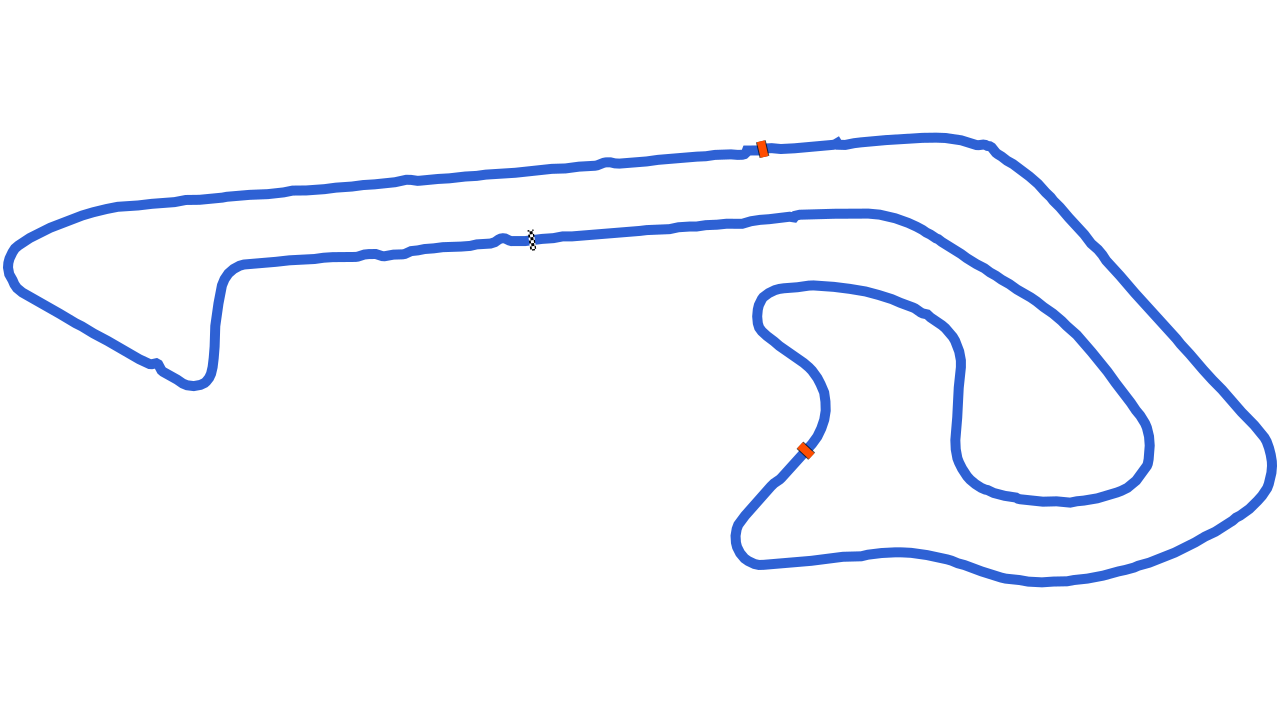
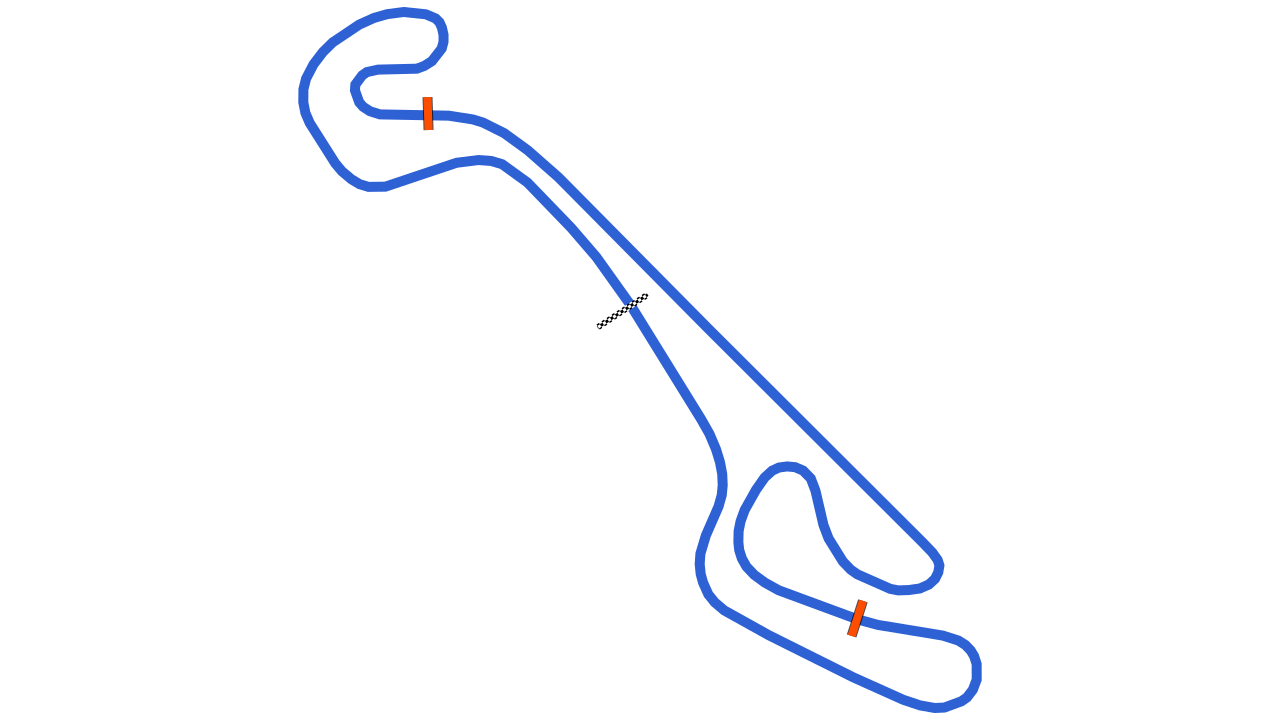
The lap measures 3,636 m with 14 corners, five to the left and nine to the right, and the track is relatively flat, with only about 6 m between its highest and lowest points. Hemmed in by the town and the aerodrome, the layout is a compact oblong: two long, almost parallel straights joined by twisty sections and tight corners. After the pit straight comes the Virage de la Ferme, the fastest corner, then the Caupenne corners and the slow Caupenne hairpin, nicknamed the Escargot. The Courbe de l'Aviation opens onto the aerodrome straight, which runs for more than 900 m and sees the highest speeds, ending at the slightly banked École hairpin. The lap continues through the Roger Dubois corner and the Henri Oreiller curve, passes under the Dunlop footbridge to the Claude Storez double curve and finishes with the S du Lac, named after a lake that has since disappeared. The track can also be split into separate northern and southern circuits. Its tight, varied corners led Formula One teams, Williams among them in 2000, to test here before the Monaco Grand Prix.
Facilities and Specialized Areas
A 2007 rebuild added a new pit building with 26 garages, a reception room, terrace, VIP boxes, press and conference rooms and a four-storey control tower, while the older pits from the 1970s were kept, so the circuit has two pit lanes. A self-service restaurant and a restaurant stand south of the École hairpin, the straights have a draining surface, and a driving school on site offers courses in saloons and single-seaters. Grandstands line the track, and the 2016 Grand Prix Camions drew more than 40,000 spectators.
History
Robert Castagnon and the driver Paul Armagnac first organised races on open roads around Nogaro in the 1950s, then built a permanent track next to the aerodrome, which Armagnac's father ran. It opened on 3 October 1960 with a shorter layout inspired by Sebring, and the circuit took Armagnac's name after he was killed at Montlhéry in 1962. The department took it over for a symbolic franc and rebuilt it in 1968. The track was extended in 1973 and reached its present length in 1989. Formula Two raced here from 1975 to 1978, the French motorcycle Grand Prix in 1978 and 1982, the European Touring Car Championship from 1985 to 1988 and Formula 3000 from 1990 to 1993. Later visitors included FIA GT in 2007 and 2008 and the finish of a Tour de France stage on 4 July 2023.
Address
Circuit Paul Armagnac
32110 Nogaro
France
Contact
circuit-nogaro.com