Japan, Mimasaka
Okayama
A 3.703 km circuit in Mimasaka. Timed layouts, lap times and what you need to know before a track day here.

Going to Okayama?
See which corner costs you the most time.
Record the session on your phone. Vetkuro splits the laps, times every sector and shows where the gap to your best lap opens.
Filming your laps?
Put speed, delta and lap time on your onboard video.
Overlay the data from the same session on the footage, synced automatically. One file to watch back, or to share.
Driving with friends?
Find out who is faster, and in which corner.
Overlay two laps from the same day and see exactly where the gap opens, not only the final number.
Recorded on Vetkuro · No sessions yet
Okayama lap times
Timed from GPS on real track days, not typed in. Compare within one layout and one vehicle class, because a motorcycle lap and a car lap are not the same thing.
No recorded laps on Okayama GP yet.
Record a session on this layout and your lap becomes the time other drivers in your class compare against.
Track day guide
Track day at Okayama
Weather by month, who runs the days and what to put in the car. Written for a first visit.
Who runs track days here
What to bring
- Helmet that meets the organiser's standard
- Long sleeves, long trousers, closed shoes
- Tyre pressure gauge, since pressures rise fast on track
- Removable towing eye fitted or in the car
- An empty boot: loose items out before the first session
- Your phone in a rigid mount, recording with Vetkuro
Weather by month
Now, in November: 15°C by day, 6°C at night, rain on 12 days. Warmest in August, 31°C by day on average. Coldest in February, −1°C at night. Fewest days with rain: April.
Rain: days with rain per month. Climate: NASA POWER, daily data 2016–2025. Monthly averages, not a forecast. Check the organiser's calendar for open dates. The data was obtained from the National Aeronautics and Space Administration (NASA) Langley Research Center's Prediction Of Worldwide Energy Resources (POWER) project funded through the NASA Earth Science Division.
Elevation profile
Okayama elevation
Elevation change 28 m, steepest gradient 7.4%. The highest point, about 276 m above sea level, is 2.95 km from the start line; the lowest, about 247 m, 1.16 km.
Height above sea level, approximate. HoverTouch the profile for any point.
From a terrain model, sampled every 10 m along the track line and smoothed over 100 m. Heights above sea level are approximate: trees and buildings along the line read up to about 15 m high. Produced using Copernicus WorldDEM-30 © DLR e.V. 2010-2014 and © Airbus Defence and Space GmbH 2014-2018 provided under COPERNICUS by the European Union and ESA; all rights reserved. The organisations in charge of the Copernicus programme by law or by delegation do not incur any liability for any use of the Copernicus WorldDEM-30.
Going to Okayama?
More to do with the session than the lap time
About Okayama
Overview
Okayama International Circuit lies in Mimasaka, Okayama Prefecture, in western Japan, on land that belonged to the town of Aida until the municipal merger of 2005. It opened in November 1990 as TI Circuit Aida and took its present name in 2005. Formula One raced here twice, as the Pacific Grand Prix of 1994 and 1995, and the circuit hosts rounds of Super GT, Super Taikyu, Super Formula Lights and the All Japan Road Race Championship for motorcycles. Between events it runs sport driving sessions for cars and motorcycles, experience runs and licence courses. Visitors arrive by road from the Sanyo or Chugoku expressways; parking is limited, so large meetings rely on shuttle buses.
Technical Specifications and Track Features
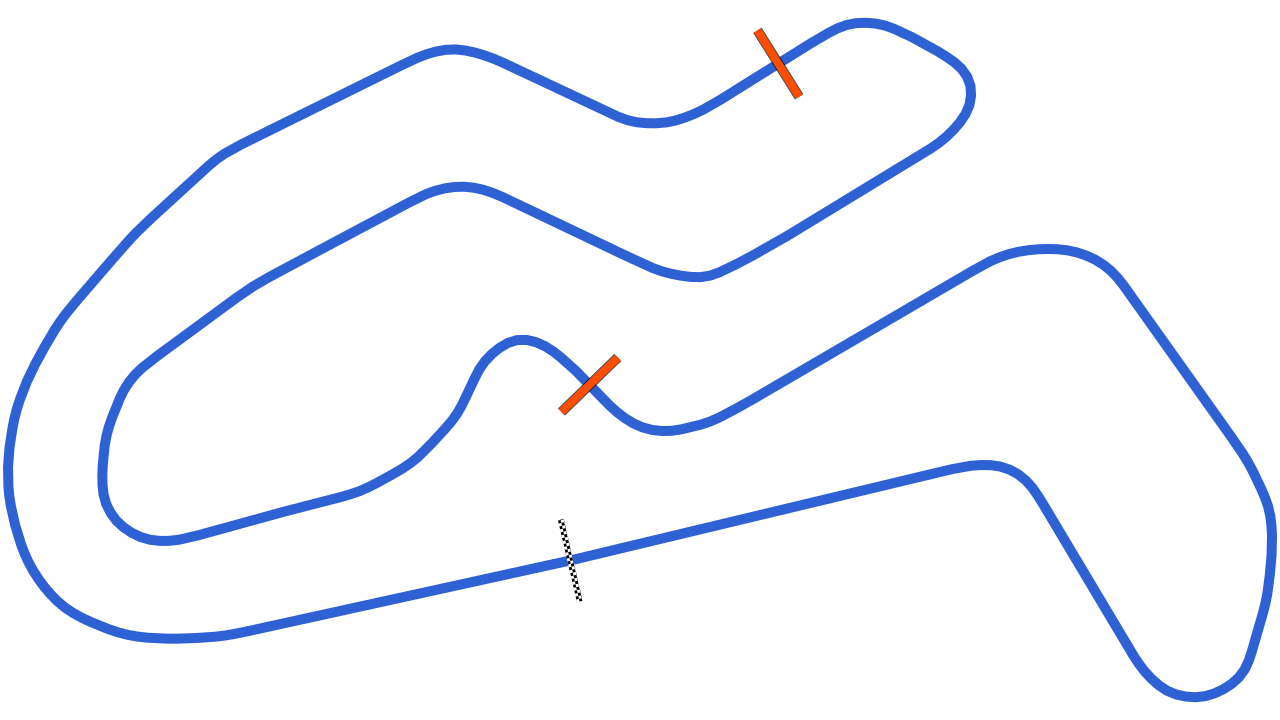
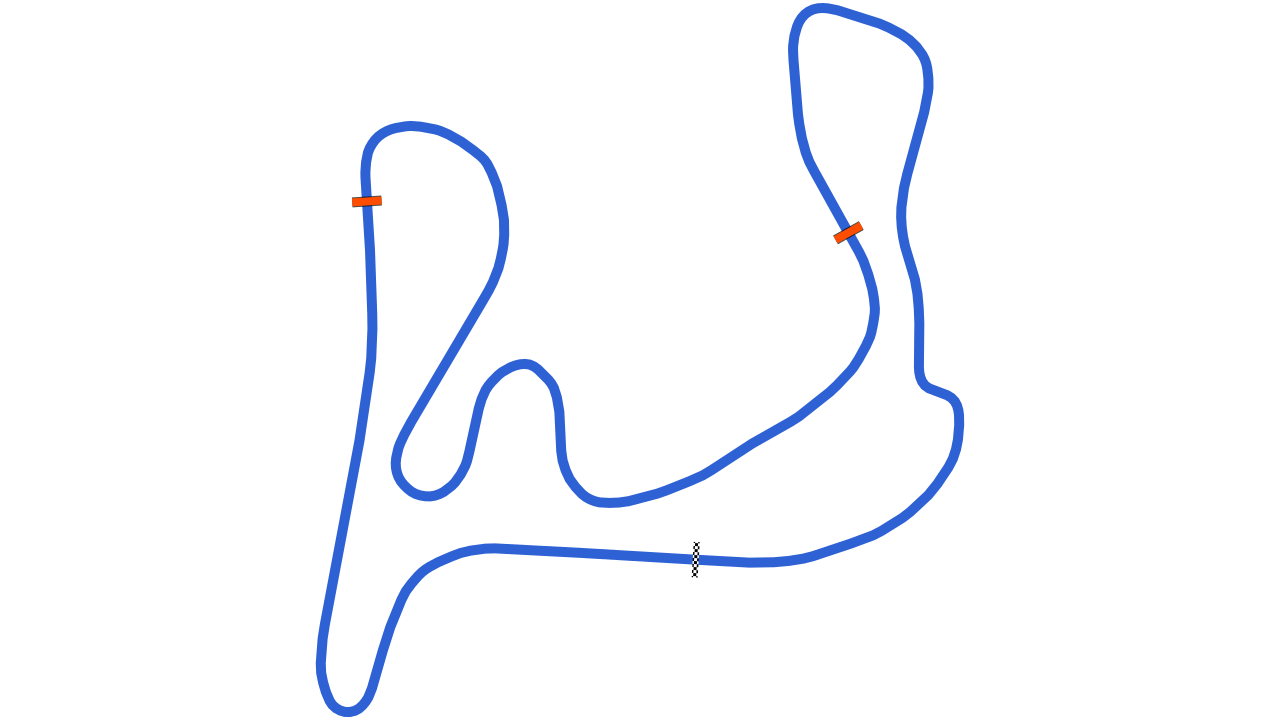
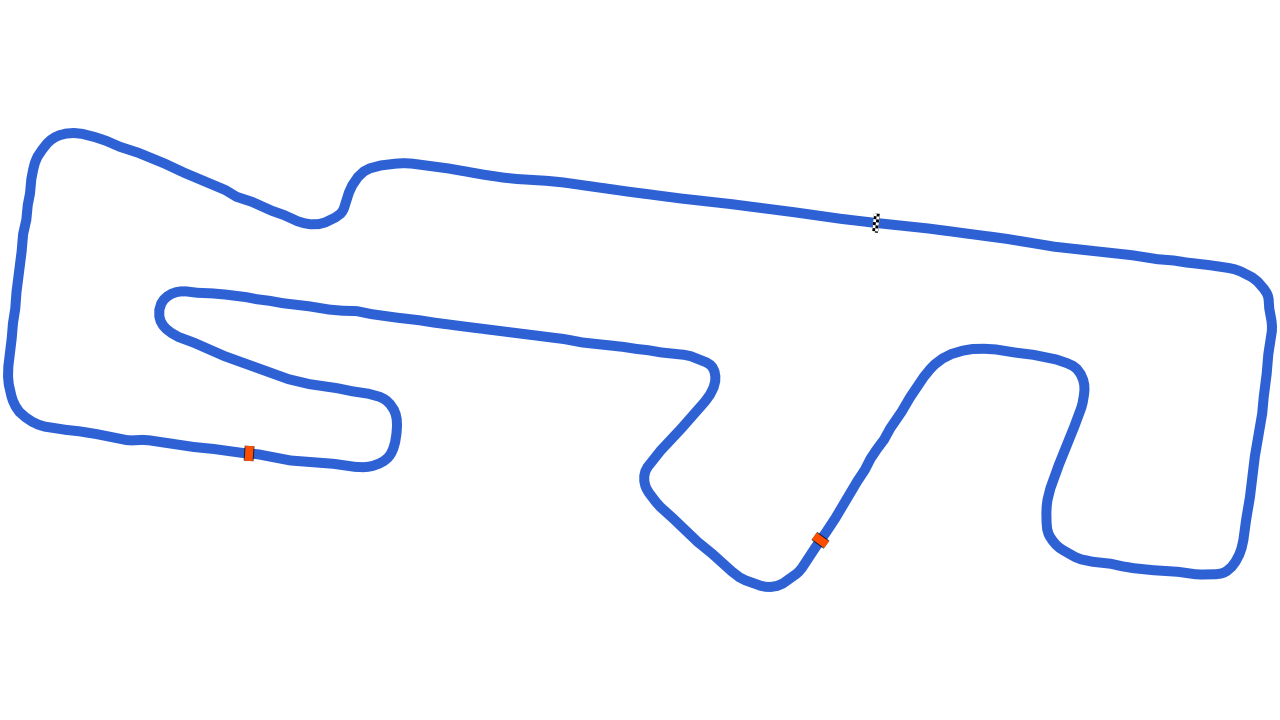
The Grand Prix course measures 3,703 m with 13 corners. Two straights dominate it: the one past the pits runs about 600 m, the back straight about 700 m. The asphalt is 12 to 15 m wide and the height difference around the lap is 29 m. Its tight infield earned it the nickname "mini Monaco" among Formula One teams. Seven corners carry the names of British veterans who drove in a members' race at the opening: Williams, the Moss S, Attwood, Piper, Redman, Hobbs and Mike Knight, with Redman and Hobbs together forming the double hairpin. The track was fully resurfaced in 2004. The pit entry was moved from before the final corner to before Mike Knight after its first position led to rear-end crashes. In 2020, after several fatal motorcycle accidents at the Moss S, the wall there was set back for more run-off and a chicane for motorcycles only was added before Williams Corner, giving riders a slightly longer lap. A shorter Piper circuit also exists.
Facilities and Specialized Areas
The grandstands seat 20,000. Each pit has monitors and power, a magnetic loop on the main straight feeds onboard lap timers, and the site has a helipad, a covered garage for race cars, cottages for overnight stays and a fuel station. A small mini course is laid out on part of the car park. Since April 2015 the NODA Racing Academy high school, which moved from Twin Ring Motegi, has been based here.
History
The circuit was the project of Hajime Tanaka, whose company Tanaka International owned more than 50 golf courses. Built during the bubble economy with Formula One in mind, it followed the country club model: about 350 lifetime memberships were sold at 15 million yen each, with Toyota and Nissan among the corporate members. The company was founded in 1988, work began in 1989 and the track opened on 18 November 1990. The Japanese Touring Car Championship opened its 1992 season here. Michael Schumacher won both Pacific Grands Prix, the first after Ayrton Senna's Williams was spun at the first corner, the second moved to October after the Great Hanshin earthquake. The remote location ended the race, and a planned International Touring Car Championship round in 1996 went to Suzuka instead. Tanaka International filed for civil rehabilitation in March 2003, Unimat took over in 2004 and renamed the circuit, the World Touring Car Championship visited from 2008 to 2010, and in 2012 the auto parts maker ASKA Corporation bought it.
Address
1210-1 Mukahigashi
701-2612 Mimasaka
Japan
Contact
okayama-international-circuit.jp