Spain, Calafat
Calafat
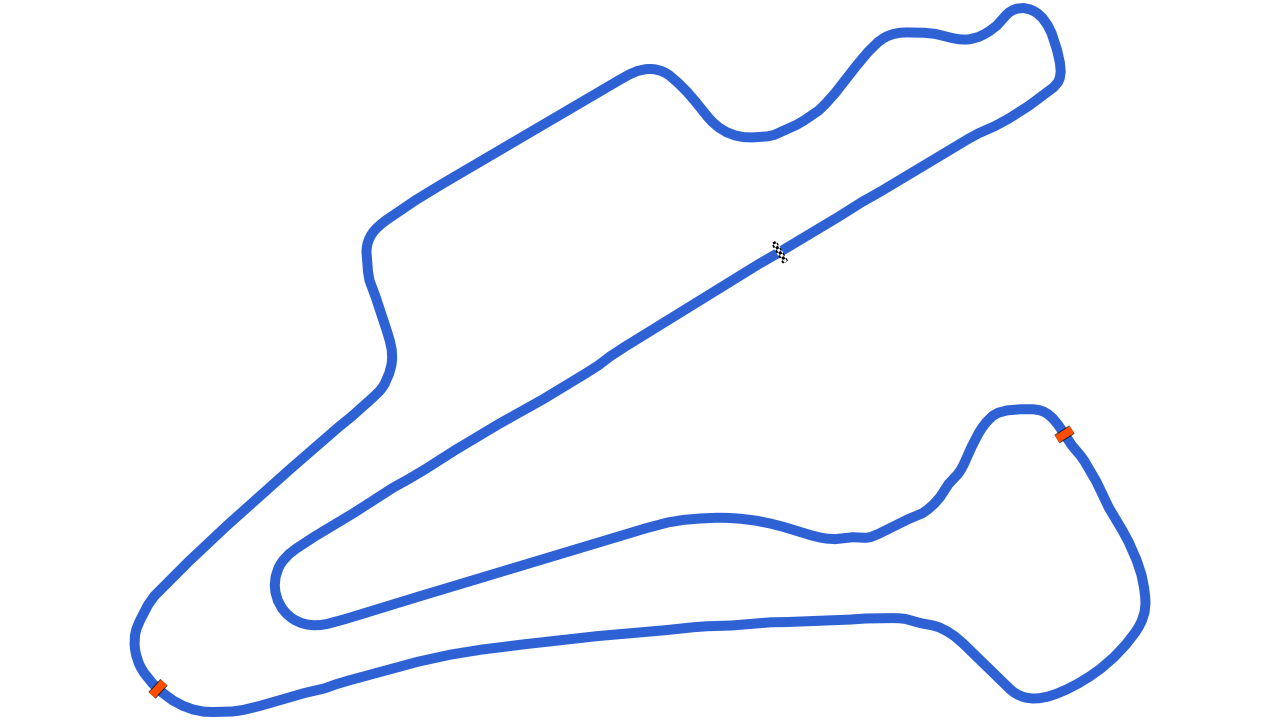
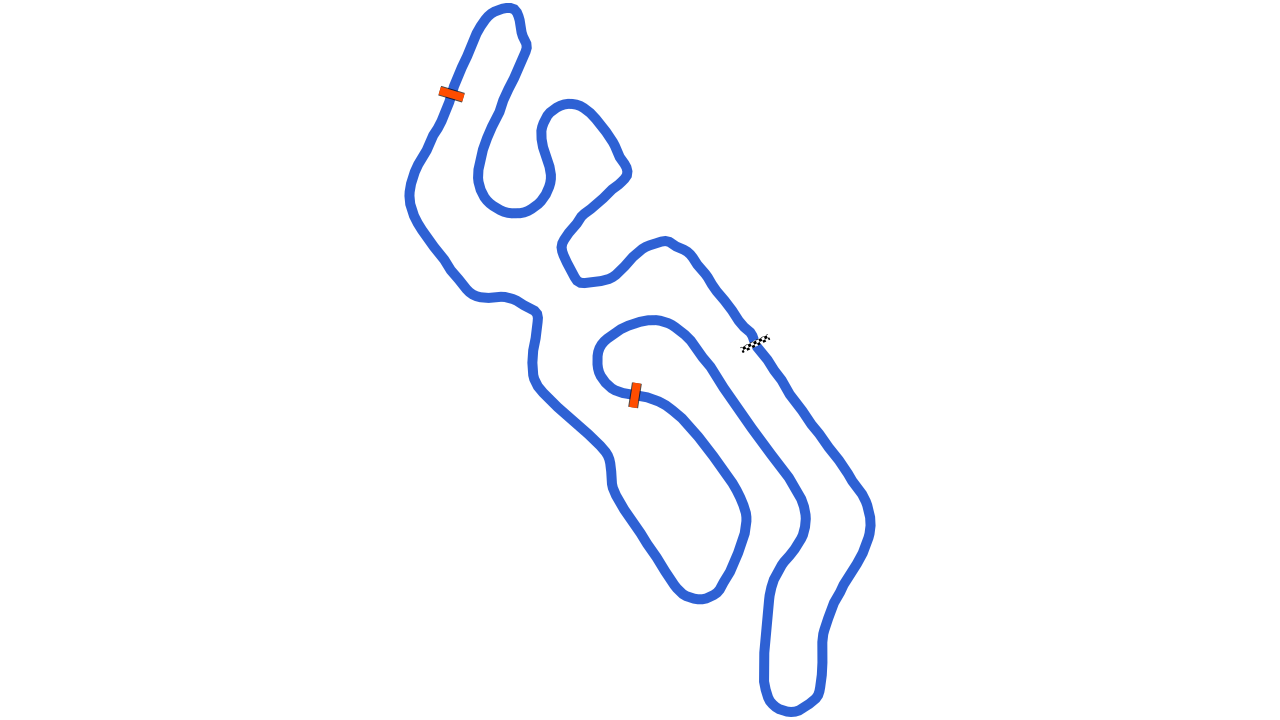
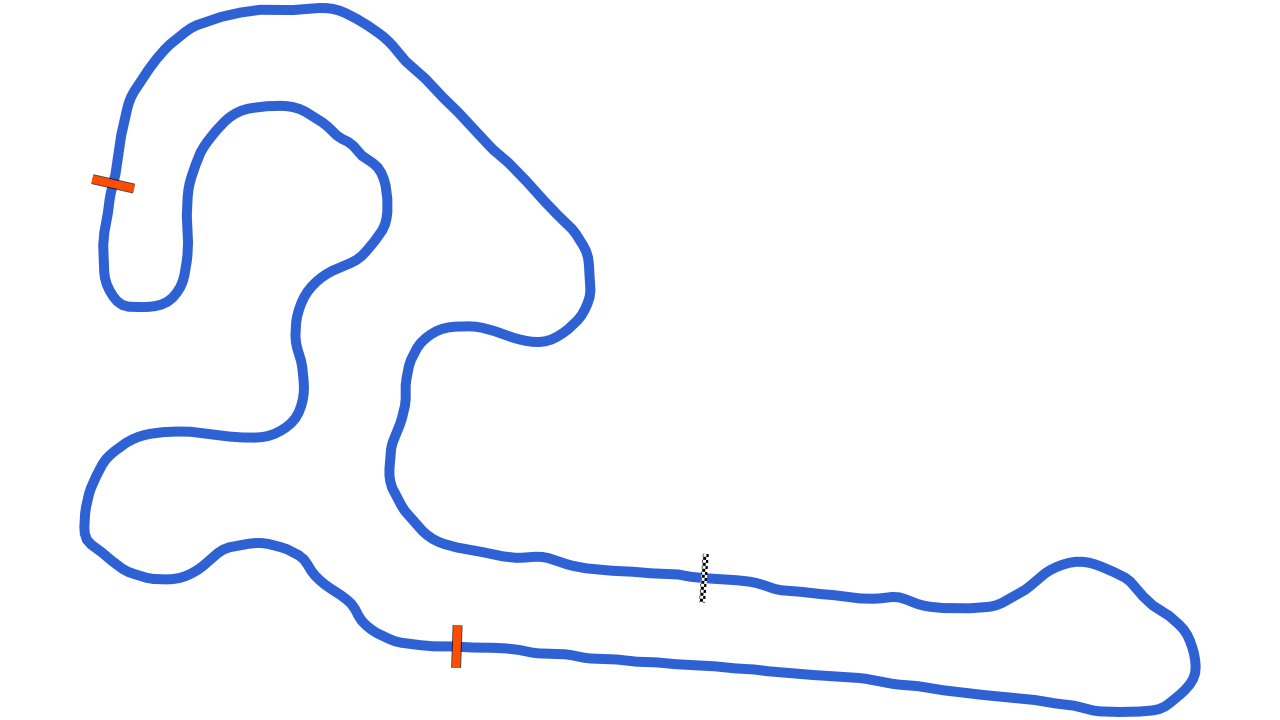
A 3.25 km circuit in Calafat. Timed layouts, lap times and what you need to know before a track day here.

Going to Calafat?
See which corner costs you the most time.
Record the session on your phone. Vetkuro splits the laps, times every sector and shows where the gap to your best lap opens.
Filming your laps?
Put speed, delta and lap time on your onboard video.
Overlay the data from the same session on the footage, synced automatically. One file to watch back, or to share.
Driving with friends?
Find out who is faster, and in which corner.
Overlay two laps from the same day and see exactly where the gap opens, not only the final number.
Recorded on Vetkuro · No sessions yet
Calafat lap times
Timed from GPS on real track days, not typed in. Compare within one layout and one vehicle class, because a motorcycle lap and a car lap are not the same thing.
No recorded laps on Calafat yet.
Record a session on this layout and your lap becomes the time other drivers in your class compare against.
Track day guide
Track day at Calafat
Weather by month, who runs the days and what to put in the car. Written for a first visit.
Who runs track days here
What to bring
- Helmet that meets the organiser's standard
- Long sleeves, long trousers, closed shoes
- Tyre pressure gauge, since pressures rise fast on track
- Removable towing eye fitted or in the car
- An empty boot: loose items out before the first session
- Your phone in a rigid mount, recording with Vetkuro
Weather by month
Now, in November: 18°C by day, 8°C at night, rain on 7 days. Warmest in July, 33°C by day on average. Coldest in January, 4°C at night. Fewest days with rain: January to February.
Rain: days with rain per month. Climate: NASA POWER, daily data 2016–2025. Monthly averages, not a forecast. Check the organiser's calendar for open dates. The data was obtained from the National Aeronautics and Space Administration (NASA) Langley Research Center's Prediction Of Worldwide Energy Resources (POWER) project funded through the NASA Earth Science Division.
Elevation profile
Calafat elevation
Elevation change 8 m, steepest gradient 2.5%. The highest point, about 41 m above sea level, is 0.27 km from the start line; the lowest, about 33 m, 2.63 km.
Height above sea level, approximate. HoverTouch the profile for any point.
From a terrain model, sampled every 10 m along the track line and smoothed over 100 m. Heights above sea level are approximate: trees and buildings along the line read up to about 15 m high. Produced using Copernicus WorldDEM-30 © DLR e.V. 2010-2014 and © Airbus Defence and Space GmbH 2014-2018 provided under COPERNICUS by the European Union and ESA; all rights reserved. The organisations in charge of the Copernicus programme by law or by delegation do not incur any liability for any use of the Copernicus WorldDEM-30.
Going to Calafat?
More to do with the session than the lap time
About Calafat
Overview
The Circuit de Calafat lies near the seaside development of Calafat in L'Ametlla de Mar, in the province of Tarragona on the southern coast of Catalonia. It sits across the AP-7 motorway from the village and is reached from the N-340 road, about 80 minutes by car from Barcelona airport. Opened in 1974, it was the second permanent circuit in Spain after Jarama. The circuit is used mainly for private testing, track days and Catalan regional car and motorcycle championships, and it has also hosted national series such as Spanish F4.
Technical Specifications and Track Features
The lap measures 3,250 m on asphalt 10 m wide, and the run-off areas are a mix of asphalt and gravel. The main straight is about 600 m. Being close to the sea, the ground is largely flat, and wind off the Mediterranean has been known to blow sandy dust onto the surface. Run-off was minimal in the early years, and later works improved the pits, kerbs and safety areas; the whole track was resurfaced at the end of 2008. In 2016 three chicanes with Formula E-style kerbs were added, each named after a Formula E team, along with a double-bend variant that created outer and inner versions of the lap. A further revision in 2018 bypassed the Curva de Escuela with two right-angle corners, replaced the old Turns 5 to 7 with a new hairpin and left-right sequence, and tightened the Segunda S with an extra chicane. The circuit has been licensed by both the Catalan and Spanish car racing federations, and in 2012 it regained a motorcycle licence from the Catalan federation, though not from the national one.
Facilities and Specialized Areas
The pit lane has 24 boxes of 6 by 4 m, and the paddock covers 16,000 m² with a paddock bar, power outlets and several toilet and shower blocks. There is also a 336 m² hangar and an 80 m² driving school building with classrooms and a garage. Beside the main circuit there is a low-grip slide track, 6.5 m to 13 m wide and fitted with sprinklers, and a 4x4 off-road course with obstacles, ramps and slopes. A rallycross variant of the circuit has also been used.
History
Building started early in 1974 to a design by Jordi Xiol, and the circuit opened on 29 September 1974 with a Formula Seat 1800 race. It was financed privately for 30 million pesetas, partly by enthusiasts who bought shares in Calafat SA. Carmelo Ezpeleta, later head of Dorna, gained his first experience of running a circuit here. Financial and licensing problems closed the track in 1982; a court ruling in 1983 gave ownership to the municipality of L'Ametlla de Mar and a 50-year lease to Calafat SA, and the circuit reopened after safety upgrades that moved Turns 5 and 6 to create more run-off. Remodelling funded by the Government of Catalonia later added an infield loop. Riders such as Ángel Nieto, Jorge Martínez, Sito Pons and Àlex Crivillé raced here, as did Carlos Sainz in Formula Ford and Pedro de la Rosa. From 2015 Formula E teams tested at Calafat, the whole Formula E field ran Gen2 tests there in April 2018, and in 2017 it staged a six-hour race for standard electric road cars.