Sweden, Karlskoga
Gelleråsen Arena
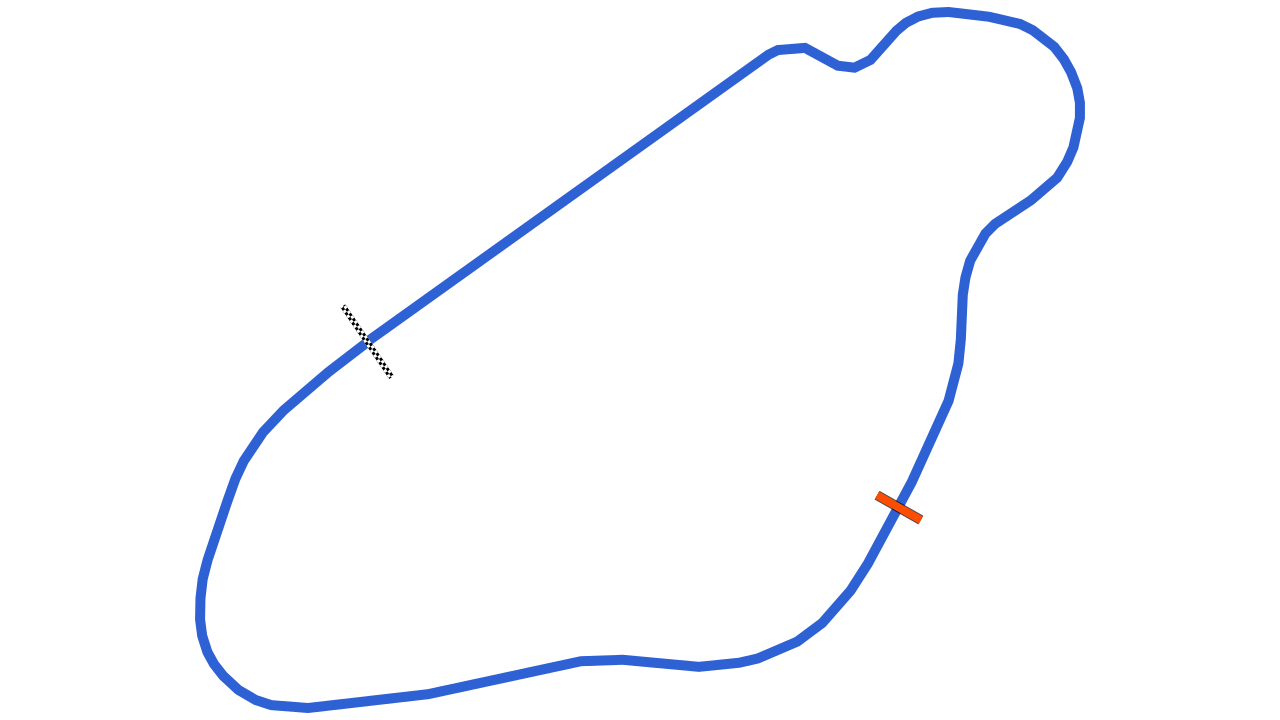
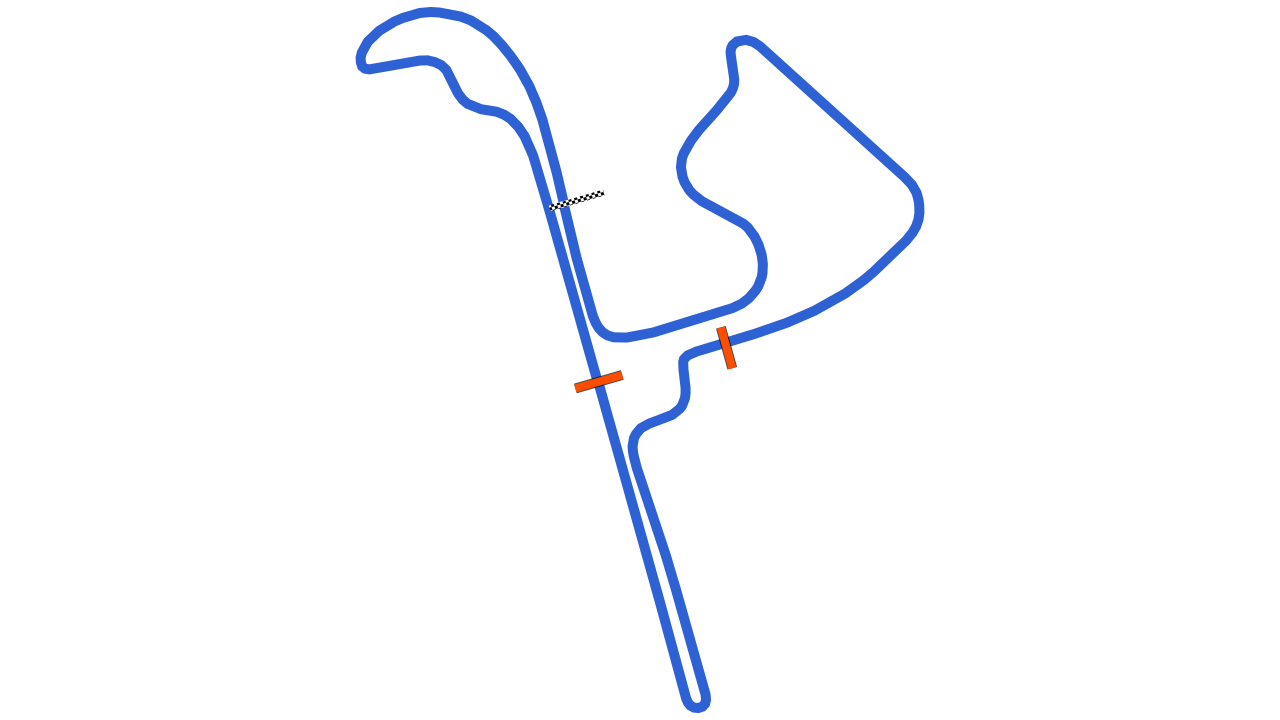
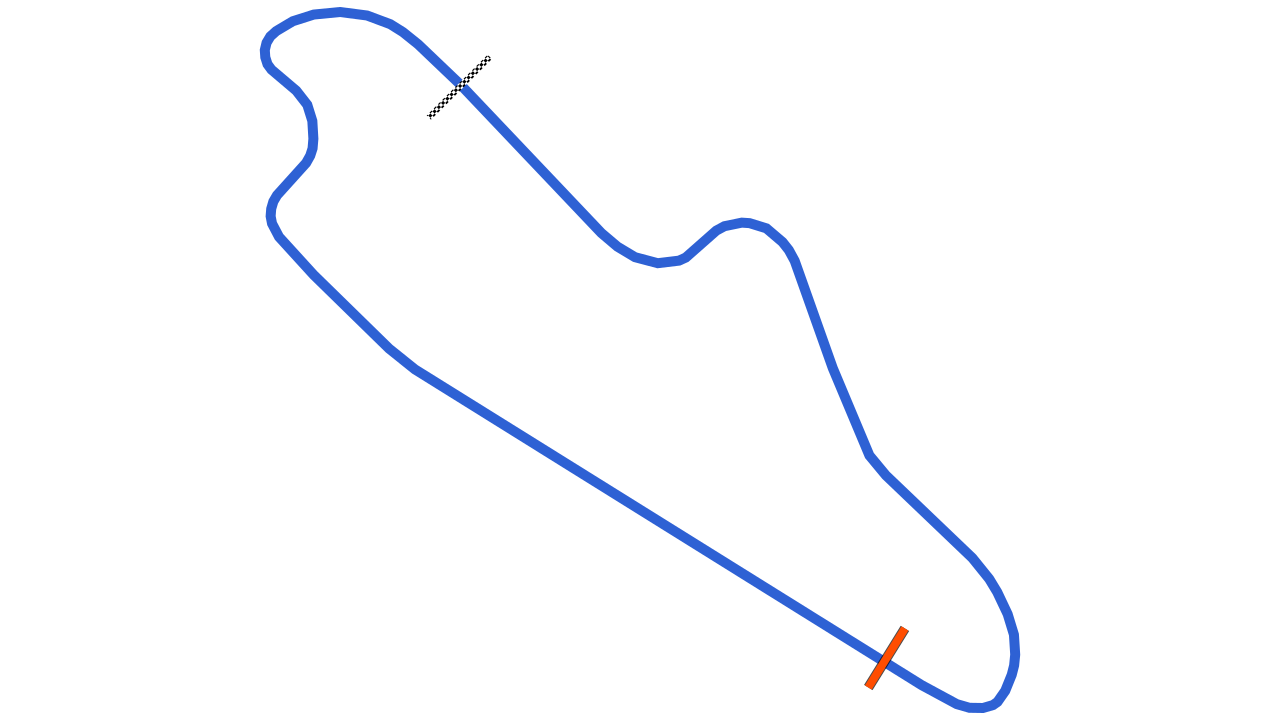
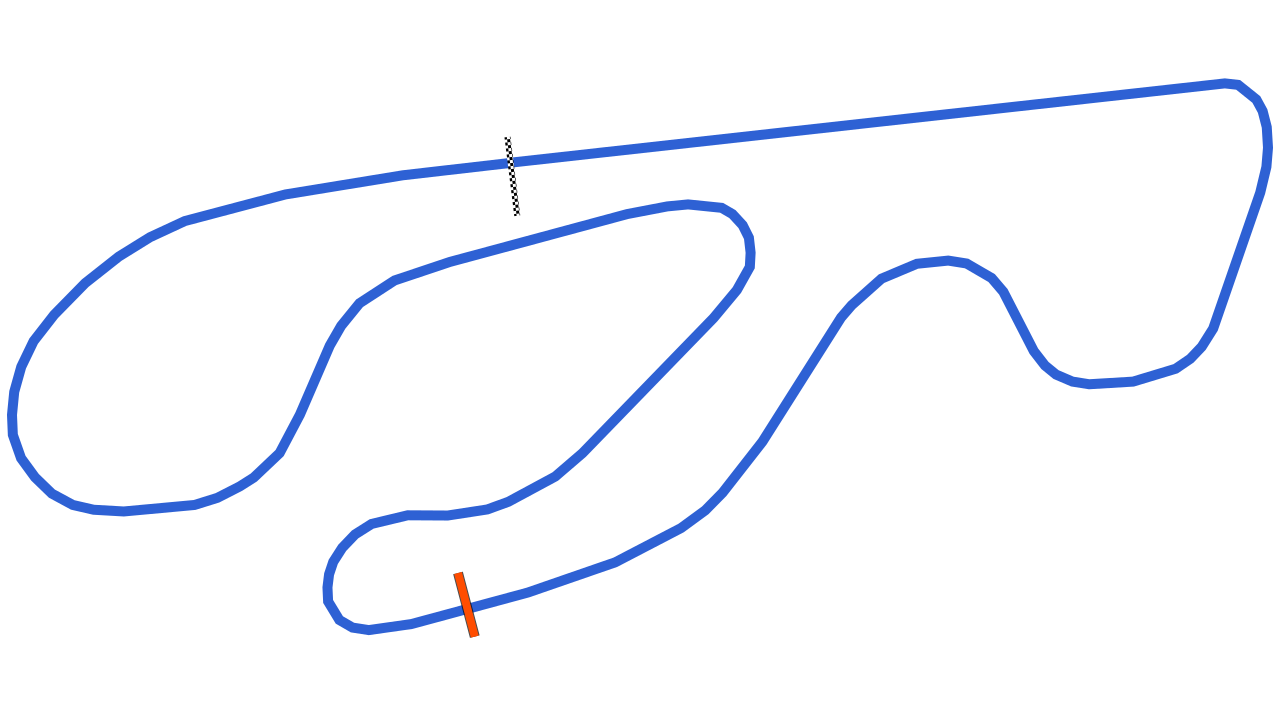
A 2.35 km circuit in Karlskoga. Timed layouts, lap times and what you need to know before a track day here.
Going to Gelleråsen Arena?
See which corner costs you the most time.
Record the session on your phone. Vetkuro splits the laps, times every sector and shows where the gap to your best lap opens.
Filming your laps?
Put speed, delta and lap time on your onboard video.
Overlay the data from the same session on the footage, synced automatically. One file to watch back, or to share.
Driving with friends?
Find out who is faster, and in which corner.
Overlay two laps from the same day and see exactly where the gap opens, not only the final number.
Recorded on Vetkuro · No sessions yet
Gelleråsen Arena lap times
Timed from GPS on real track days, not typed in. Compare within one layout and one vehicle class, because a motorcycle lap and a car lap are not the same thing.
No recorded laps on Gelleråsen Arena yet.
Record a session on this layout and your lap becomes the time other drivers in your class compare against.
Track day guide
Track day at Gelleråsen Arena
Weather by month, who runs the days and what to put in the car. Written for a first visit.
Who runs track days here
What to bring
- Helmet that meets the organiser's standard
- Long sleeves, long trousers, closed shoes
- Tyre pressure gauge, since pressures rise fast on track
- Removable towing eye fitted or in the car
- An empty boot: loose items out before the first session
- Your phone in a rigid mount, recording with Vetkuro
Weather by month
Now, in November: 3°C by day, −1°C at night, rain on 14 days. Warmest in July, 21°C by day on average. Coldest in January, −7°C at night. Fewest days with rain: April.
Rain: days with rain per month. Climate: NASA POWER, daily data 2016–2025. Monthly averages, not a forecast. Check the organiser's calendar for open dates. The data was obtained from the National Aeronautics and Space Administration (NASA) Langley Research Center's Prediction Of Worldwide Energy Resources (POWER) project funded through the NASA Earth Science Division.
Elevation profile
Gelleråsen Arena elevation
Elevation change 3 m. That is within the margin of the terrain model, so Gelleråsen Arena counts as flat and there is no profile to draw.
From a terrain model, sampled every 10 m along the track line and smoothed over 100 m. Produced using Copernicus WorldDEM-30 © DLR e.V. 2010-2014 and © Airbus Defence and Space GmbH 2014-2018 provided under COPERNICUS by the European Union and ESA; all rights reserved. The organisations in charge of the Copernicus programme by law or by delegation do not incur any liability for any use of the Copernicus WorldDEM-30.
Going to Gelleråsen Arena?
More to do with the session than the lap time
About Gelleråsen Arena
Overview
Gelleråsen Arena, known until 2018 as Karlskoga Motorstadion, is a permanent road circuit at Gelleråsen in Karlskoga Municipality, a short drive north of Karlskoga on route 205 and some 50 km west of Örebro. Built in 1949, it is regarded as Sweden's oldest permanent motor racing circuit, and it was laid out so that spectators could see the whole lap from their vantage points. Since 2018 it has been run by the racing driver Richard Göransson. Its traditional meeting is the Kanonloppet, first held in 1950, and the circuit has been a regular venue for the Swedish Touring Car Championship and the Porsche Carrera Cup Scandinavia. The arena also offers track days, passenger rides, single-seater driving days and team events.
Technical Specifications and Track Features
The track is 10 m wide and has generous run-off areas. It can be divided into two loops, and a shortened course, opened in 2014, reuses parts of the original short circuit and was the first short version to include the start-finish straight and the pit area; it suits Legend cars and short sprint races. In 2006 a new first-corner complex was built closer to the start-finish line to gain run-off, in 2016 the whole track was resurfaced and the exit of the Depåkurvan was bypassed by a new straight joining the main straight at an angle, and in 2017 the last corner was altered, shortening the lap. In 2024 Lukas Sundahl set the race lap record for the present layout, 1:03.470, in a Porsche 911 GT3 Cup.
Facilities and Specialized Areas
Three grandstands line the track: the main stand with 720 plastic seats, a wooden stand for just over 1,000 people and a wooden stand at the pit corner for just under 600. Twelve pit garages were built in 2008 and a judges' tower with timing, a VIP lounge and a terrace in 2010. The site has a restaurant, the PitStop Café, conference rooms, a workshop, camping cabins and a rental kart track. A large karting circuit, described as the longest in Sweden, was built in 2023 and opened by Prince Carl Philip.
History
After the Second World War Gunnar Olsson, chairman of the Karlskoga motor club, worked with the landowner and quarry operator Elias Frisk to create a permanent course. Building began on 21 June 1949, and the first Kanonloppet was run on the gravel loop on 4 June 1950 in front of about 15,000 people. The track was asphalted in 1952, extended with the Björkdungskurvan, later called the Tröskurvan, in 1953, and officially opened by Prince Bertil in 1954. In 1958 the steeply banked Velodromkurvan lengthened the lap by a kilometre. Stirling Moss won in 1961, the first year of Formula One rules, followed by Masten Gregory in 1962 and Jim Clark in 1963, and in 1965 a record 44,000 spectators came. On 8 August 1970 two touring cars crashed into the crowd at the Velodromkurvan, killing five people, and the circuit stayed closed for two years while barriers were upgraded. It reopened in 1973 with a European Formula Two round won by Jean-Pierre Jarier, and Barry Sheene won the 1979 Swedish motorcycle Grand Prix here. The founding club went bankrupt in 1984, Mike Luff took over operations in 1992, and the banked Velodromkurvan was later removed. Pits and paddock moved outside the circuit in 2000.
Address
Gelleråsen 654
691 91 Karlskoga
Sweden
Contact
gellerasen.se