Argentina, Sauce Montrull
Autódromo Ciudad de Paraná
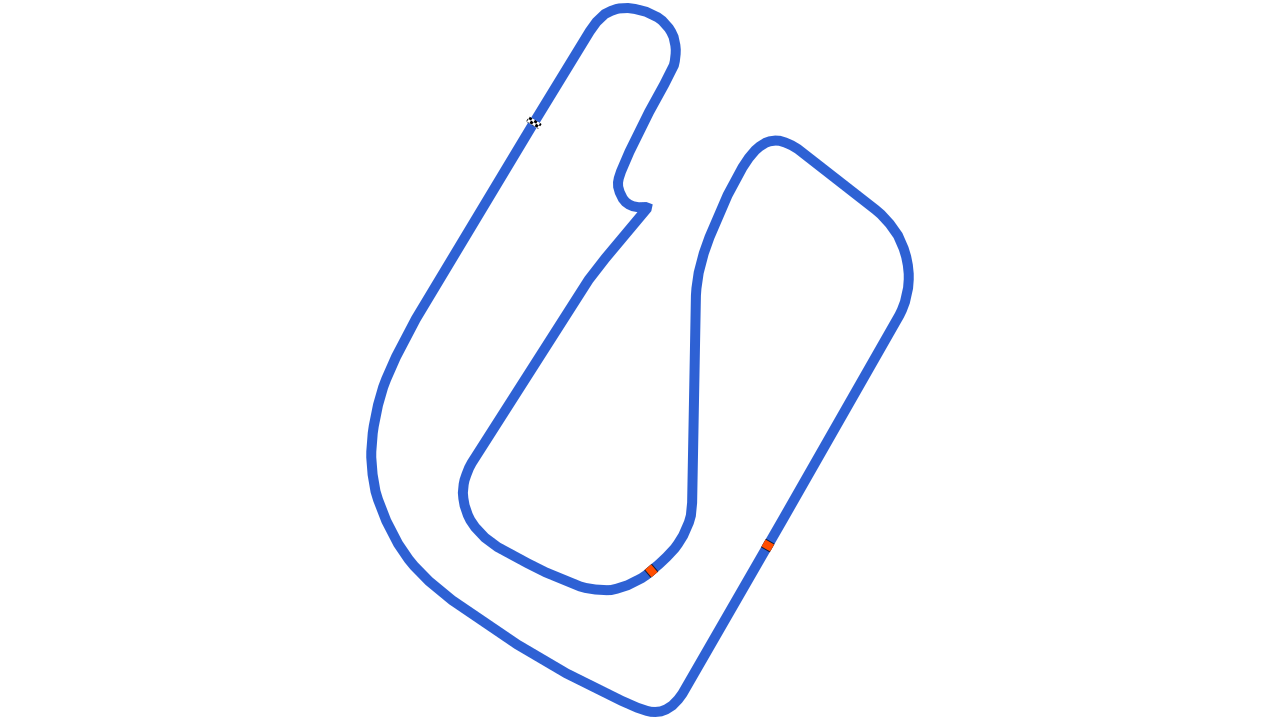
A 4.219 km circuit in Sauce Montrull. Timed layouts, lap times and what you need to know before a track day here.
Going to Autódromo Ciudad de Paraná?
See which corner costs you the most time.
Record the session on your phone. Vetkuro splits the laps, times every sector and shows where the gap to your best lap opens.
Filming your laps?
Put speed, delta and lap time on your onboard video.
Overlay the data from the same session on the footage, synced automatically. One file to watch back, or to share.
Driving with friends?
Find out who is faster, and in which corner.
Overlay two laps from the same day and see exactly where the gap opens, not only the final number.
Recorded on Vetkuro · No sessions yet
Autódromo Ciudad de Paraná lap times
Timed from GPS on real track days, not typed in. Compare within one layout and one vehicle class, because a motorcycle lap and a car lap are not the same thing.
No recorded laps on Circuito Completo yet.
Record a session on this layout and your lap becomes the time other drivers in your class compare against.
Track day guide
Track day at Autódromo Ciudad de Paraná
Weather by month, who runs the days and what to put in the car. Written for a first visit.
Who runs track days here
What to bring
- Helmet that meets the organiser's standard
- Long sleeves, long trousers, closed shoes
- Tyre pressure gauge, since pressures rise fast on track
- Removable towing eye fitted or in the car
- An empty boot: loose items out before the first session
- Your phone in a rigid mount, recording with Vetkuro
Weather by month
Now, in November: 30°C by day, 16°C at night, rain on 9 days. Warmest in January, 34°C by day on average. Coldest in July, 7°C at night. Fewest days with rain: June.
Rain: days with rain per month. Climate: NASA POWER, daily data 2016–2025. Monthly averages, not a forecast. Check the organiser's calendar for open dates. The data was obtained from the National Aeronautics and Space Administration (NASA) Langley Research Center's Prediction Of Worldwide Energy Resources (POWER) project funded through the NASA Earth Science Division.
Elevation profile
Autódromo Ciudad de Paraná elevation
Elevation change 16 m, steepest gradient 3.0%. The highest point, about 63 m above sea level, is 0.93 km from the start line; the lowest, about 47 m, 3.90 km.
Height above sea level, approximate. HoverTouch the profile for any point.
From a terrain model, sampled every 10 m along the track line and smoothed over 100 m. Heights above sea level are approximate: trees and buildings along the line read up to about 15 m high. Produced using Copernicus WorldDEM-30 © DLR e.V. 2010-2014 and © Airbus Defence and Space GmbH 2014-2018 provided under COPERNICUS by the European Union and ESA; all rights reserved. The organisations in charge of the Copernicus programme by law or by delegation do not incur any liability for any use of the Copernicus WorldDEM-30.
Going to Autódromo Ciudad de Paraná?
More to do with the session than the lap time
About Autódromo Ciudad de Paraná
Overview
Autódromo Ciudad de Paraná lies in the Comuna de Sauce Montrull, just outside Paraná, the capital of Entre Ríos. It belongs to the Club de Volantes Entrerrianos, which also runs it, and it is the most important circuit in the province, ahead of Concordia and Concepción del Uruguay. Argentina's main national series are regular visitors: Turismo Nacional opened its 2026 season there in February, and Turismo Carretera, TC Pista and Fórmula Metropolitana raced there in August 2026, when more than 2,000 tickets were sold in advance.
Technical Specifications and Track Features
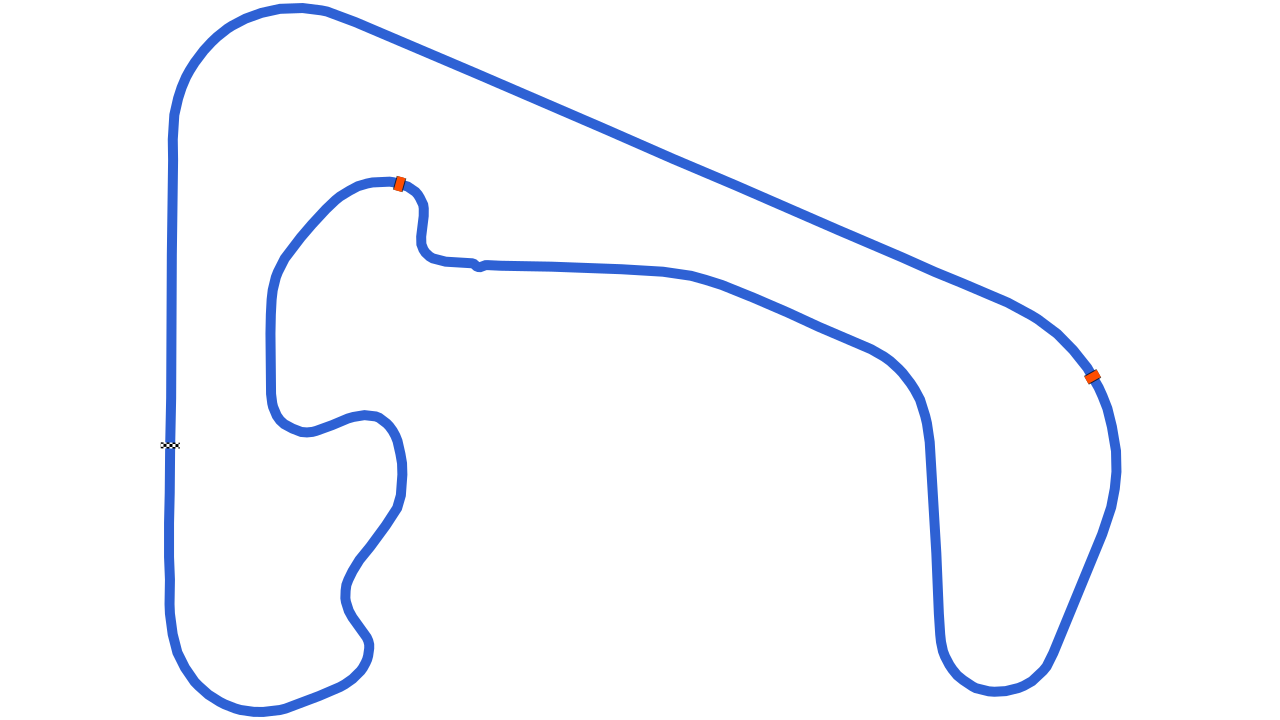
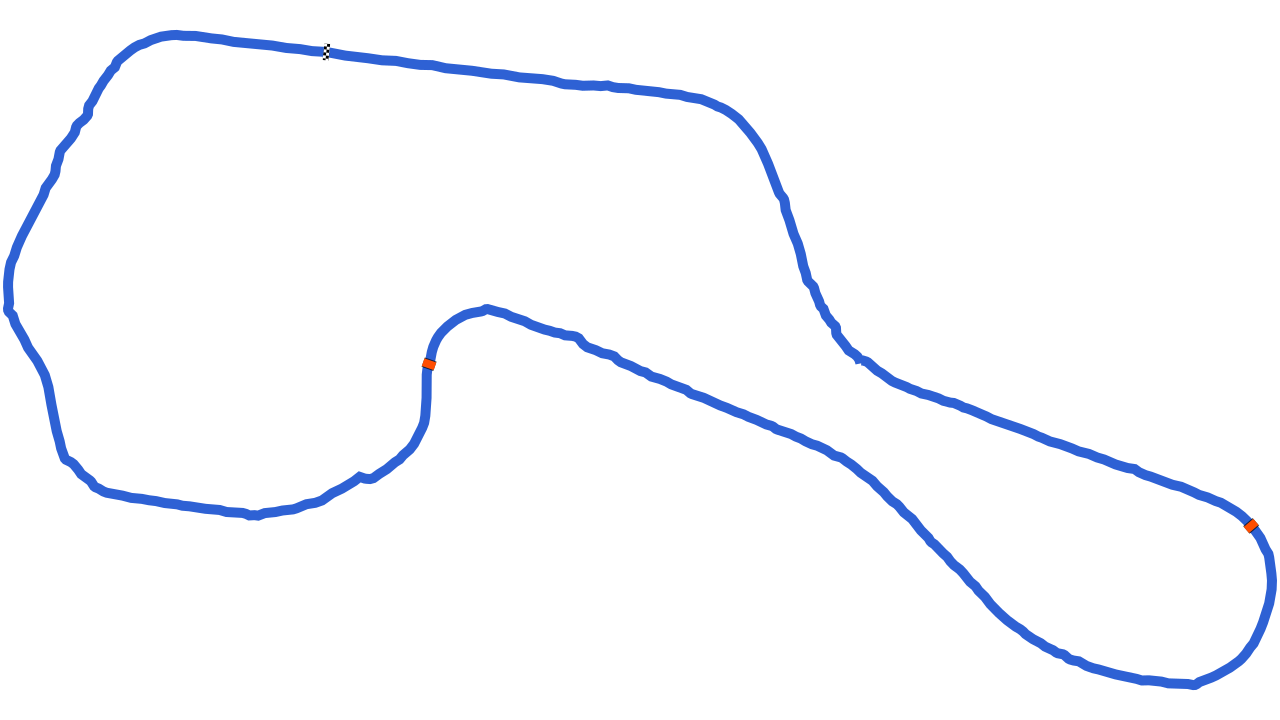
The full circuit measures 4,219 m, and shorter variants of 2,595 m and 2,200 m have also been used. It is considered one of the fastest tracks on the national calendar. The long main straight ends in a fast left-hander, a further straight leads to the back straight, and a medium-speed left-hander at its end finishes in one of the circuit's heaviest braking zones. The return through the infield combines a long inner straight, a hairpin and a diagonal straight, with a short left-right sequence before the final corner onto the pit straight.
Facilities and Specialized Areas
A pit lane separated by a wall runs alongside the main straight, with the pit buildings and paddock on the inside of the circuit, and spectators can choose between general admission and grandstand seating. The property also includes a kart circuit, and a dedicated motocross track was built so that motorcycle racing could share the venue. Track preparation and race organisation are in the hands of the club's own commission.
History
The story begins on 7 December 1941, when a group of enthusiasts laid the foundation stone of the Club de Volantes Entrerrianos on the site where the circuit stands today. In its early years the club organised single-seater races on an improvised course in Parque Urquiza. In 1963 it bought the land next to the Aero Club de Paraná and on 14 April opened a compacted dirt track, where Argentino Vaccaretti won the first race in a Ford T. The club then set out to pave the course, and the asphalt track was first used on 21 September 1969 for a Turismo Anexo J race, the forerunner of Turismo Nacional. The official opening followed on 7 December 1969 with three races, won by Eduardo Copello in a Numa-Tornado sports prototype, Carlos Reutemann in Fórmula 2 and Carlos Ragno in Fórmula 4. Paraná has since hosted many title deciders and milestones, including the 1000th race in Turismo Carretera history on 5 October 2003, won by Juan Manuel Silva in a Ford Falcon, and the TC2000 finale of 27 November 2006, when Matías Rossi won the race and the championship in a Chevrolet Astra.