United States of America, Daytona Beach
Daytona
A 5.729 km circuit in Daytona Beach. Timed layouts, lap times and what you need to know before a track day here.

Going to Daytona?
See which corner costs you the most time.
Record the session on your phone. Vetkuro splits the laps, times every sector and shows where the gap to your best lap opens.
Filming your laps?
Put speed, delta and lap time on your onboard video.
Overlay the data from the same session on the footage, synced automatically. One file to watch back, or to share.
Driving with friends?
Find out who is faster, and in which corner.
Overlay two laps from the same day and see exactly where the gap opens, not only the final number.
Track layouts
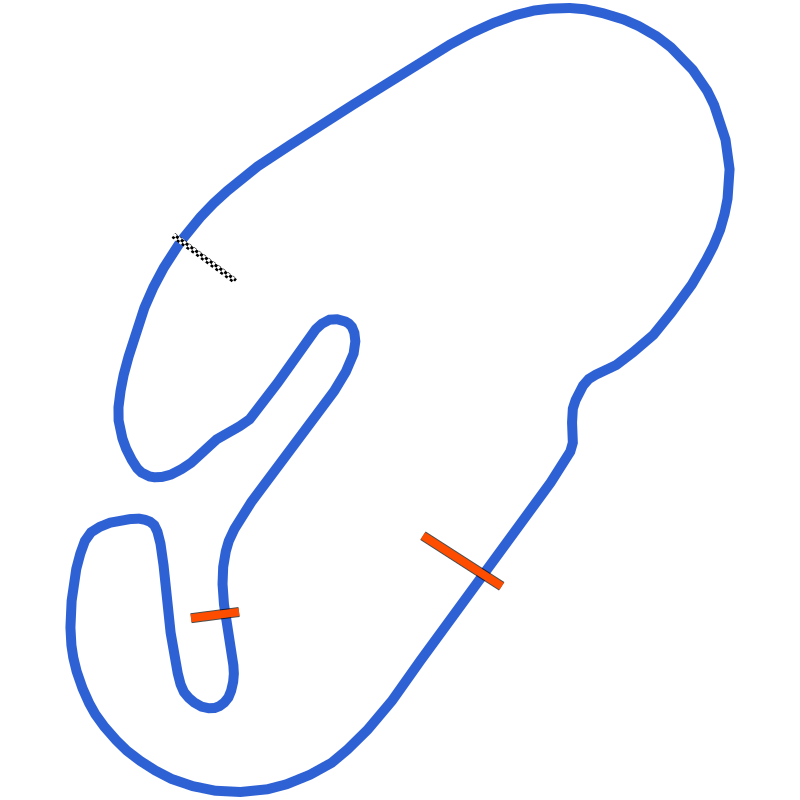
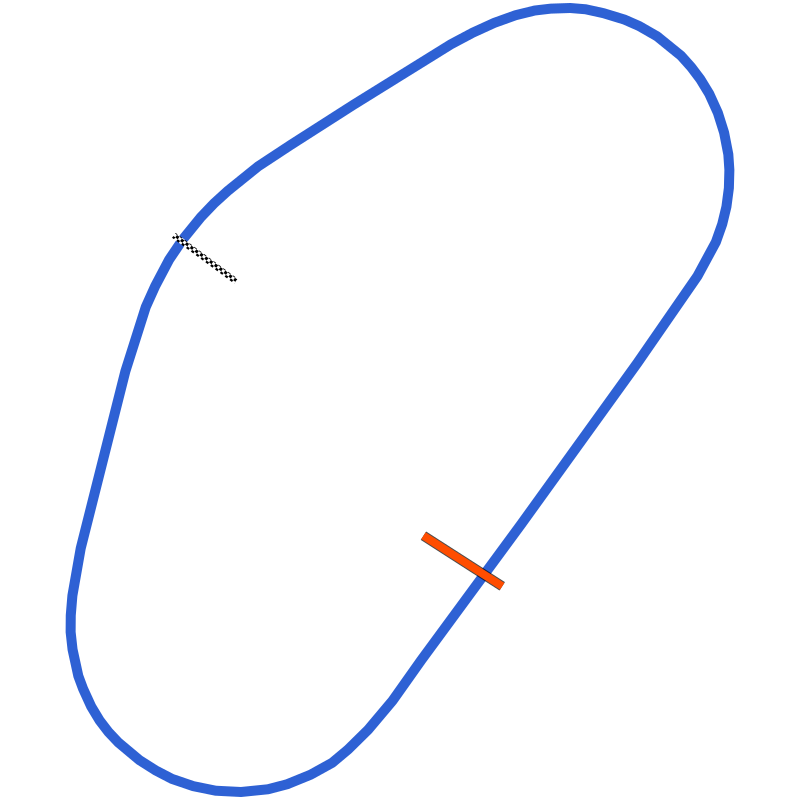
Lap times only compare within one layout.
Going to Daytona?
See which corner costs you the most time.
Record the session on your phone. Vetkuro splits the laps, times every sector and shows where the gap to your best lap opens.
Filming your laps?
Put speed, delta and lap time on your onboard video.
Overlay the data from the same session on the footage, synced automatically. One file to watch back, or to share.
Driving with friends?
Find out who is faster, and in which corner.
Overlay two laps from the same day and see exactly where the gap opens, not only the final number.
Recorded on Vetkuro · No sessions yet
Daytona lap times
Timed from GPS on real track days, not typed in. Compare within one layout and one vehicle class, because a motorcycle lap and a car lap are not the same thing.
No recorded laps on Daytona Road Course yet.
Record a session on this layout and your lap becomes the time other drivers in your class compare against.
Track day guide
Track day at Daytona
Weather by month, who runs the days and what to put in the car. Written for a first visit.
Who runs track days here
What to bring
- Helmet that meets the organiser's standard
- Long sleeves, long trousers, closed shoes
- Tyre pressure gauge, since pressures rise fast on track
- Removable towing eye fitted or in the car
- An empty boot: loose items out before the first session
- Your phone in a rigid mount, recording with Vetkuro
Weather by month
Now, in November: 25°C by day, 15°C at night, rain on 8 days. Warmest in July, 33°C by day on average. Coldest in January, 9°C at night. Fewest days with rain: January.
Rain: days with rain per month. Climate: NASA POWER, daily data 2016–2025. Monthly averages, not a forecast. Check the organiser's calendar for open dates. The data was obtained from the National Aeronautics and Space Administration (NASA) Langley Research Center's Prediction Of Worldwide Energy Resources (POWER) project funded through the NASA Earth Science Division.
Elevation profile
Daytona elevation
Elevation change 6 m, steepest gradient 2.4%. The highest point, about 14 m above sea level, is 2.73 km from the start line; the lowest, about 8 m, 3.93 km.
Height above sea level, approximate. HoverTouch the profile for any point.
From a terrain model, sampled every 10 m along the track line and smoothed over 100 m. Heights above sea level are approximate: trees and buildings along the line read up to about 15 m high. Produced using Copernicus WorldDEM-30 © DLR e.V. 2010-2014 and © Airbus Defence and Space GmbH 2014-2018 provided under COPERNICUS by the European Union and ESA; all rights reserved. The organisations in charge of the Copernicus programme by law or by delegation do not incur any liability for any use of the Copernicus WorldDEM-30.
Going to Daytona?
More to do with the session than the lap time
About Daytona
Overview
Daytona International Speedway stands in Daytona Beach on the Atlantic coast of Florida, next to Daytona Beach International Airport and within reach of Interstate 95 and Interstate 4. It was built by NASCAR founder Bill France Sr. on land leased from the city. NASCAR has operated it since it opened in 1959, and ownership passed to NASCAR in 2019 from International Speedway Corporation. The speedway hosts the Daytona 500, a second NASCAR Cup race later in the year, the Rolex 24 at Daytona endurance race for sports cars, the Daytona 200 for motorcycles and rounds of the lower NASCAR series, ARCA and AMA Supercross.
Technical Specifications and Track Features
The high-banked tri-oval measures 4.023 km (2.5 miles) with four turns. The turns are banked at 31 degrees, the tri-oval section at 18 degrees and the back straight at 3 degrees. Engineer Charles Moneypenny devised a way to pave the steep banking by anchoring equipment to bulldozers at the top, a method later used at other speedways. The sports car course, used by the Rolex 24, measures 5.729 km (3.56 miles) with 12 turns: it combines most of the oval with an infield section and a chicane at the end of the back straight, renamed the Le Mans Chicane in 2022. Motorcycles use a shorter course that leaves out part of the banking. The oval was resurfaced in 2010 with about 50,000 tons of asphalt after problems with the old surface at that year's Daytona 500. Álex Palou set the sports car course race lap record of 1:33.724 at the 2022 Rolex 24.
Facilities and Specialized Areas
The infield covers about 180 acres and holds Lake Lloyd, a 29-acre lake that formed when soil was dug out to build the banking and has hosted powerboat races. It also contains a fan zone, built in 2004 when the infield was rebuilt along with a tunnel under Turn 1. The Daytona Rising project, begun in July 2013 and finished for 2016 at a cost of 400 million dollars, rebuilt the frontstretch grandstand with about 101,500 wider permanent seats, five large entrances called injectors with escalators and lifts to three concourse levels, more than 60 suites and many more restrooms and concession stands. The backstretch stands were taken down and replaced by parking. Lights were installed in 1998 for night racing.
History
Racing on the hard sand of Daytona Beach drew crowds from the 1930s, and Bill France Sr., who first entered the beach race in 1935, soon took over its promotion. As speeds and beachfront building grew, he looked for a permanent site, and in 1957 the city agreed to lease land beside the airport. Ground was broken on 25 November 1957, with money from investors, sponsors, local shareholders and advance ticket sales. The first Daytona 500, on 22 February 1959, ended in a photo finish that took three days to settle, with Lee Petty declared the winner over Johnny Beauchamp. A three-hour sports car race on the road course began in 1962 and grew into a 24-hour race in 1966. The road course was reshaped several times, gaining its chicane in 1973 and reaching its present length in the 1980s. Dale Earnhardt was killed on the final lap of the 2001 Daytona 500.
Address
1801 W International Speedway Blvd
32114 Daytona Beach
United States of America
Contact
daytonainternationalspeedway.com